Unlock the secrets of cloud gaming and elevate your play without constant hardware upgrades. This guide delves deep into how cloud gaming is built, revealing the powerful infrastructure and innovative technologies that bring high-fidelity games to any screen. Discover how data centers stream games seamlessly to you, minimizing latency and maximizing fun. Learn about the virtualized hardware, global network architecture, and software innovations making this possible. For busy gamers balancing life and passion, cloud gaming offers unmatched flexibility, allowing you to play top titles from anywhere, on almost any device. We cover everything from internet speed requirements to input lag reduction, helping you understand the tech behind the magic and optimize your experience. Stay current with gaming trends and enjoy premium experiences without breaking the bank, all by understanding the backbone of cloud gaming.
How does cloud gaming actually deliver games to my screen?What kind of infrastructure powers cloud gaming services?Why is network latency such a big deal for cloud gaming?Who benefits most from how cloud gaming is built?What components make up a cloud gaming system?How do cloud gaming services stream games so seamlessly?
Cloud gaming services operate by running games on powerful remote servers in data centers. These servers process the game, render the visuals, and then encode that video and audio stream in real-time. This compressed stream is sent over the internet to your device, which decodes it and displays it on your screen. Your controller inputs travel back to the server, creating a continuous, interactive loop. This entire process happens within milliseconds, making the game feel like it's running locally.
What hardware powers the gaming in the cloud?
The gaming in the cloud is powered by specialized, high-performance hardware located in vast data centers. These facilities house racks of servers equipped with enterprise-grade CPUs, powerful virtualized GPUs (often multiple per server to handle concurrent user sessions), and ultra-fast storage solutions like NVMe SSDs. This hardware is continuously maintained and upgraded by the service provider, ensuring gamers always have access to cutting-edge performance without needing to buy their own.
Why is a strong internet connection essential for cloud gaming?
A strong internet connection is crucial because it acts as the lifeline between your device and the remote gaming server. Cloud gaming requires both a high-bandwidth download (to receive the video stream) and a low-latency upload (to send your inputs). A weak or unstable connection leads to noticeable input lag, visual artifacts like pixelation, and potential disconnections, severely degrading the gaming experience. It's about stability and speed for real-time two-way data transfer.
Where are the servers located that host cloud games?
Cloud gaming servers are strategically located in data centers distributed across various geographical regions worldwide. Providers place these data centers as close as possible to major population centers and internet exchange points to minimize the physical distance data has to travel. This proximity is vital for reducing network latency and ensuring a responsive gaming experience for users by cutting down the round-trip time for inputs and video streams.
How do cloud gaming platforms minimize input lag?
Cloud gaming platforms minimize input lag through several sophisticated techniques. These include strategically locating servers close to users, employing highly optimized network routing and dedicated infrastructure, using efficient video compression algorithms (like H.265 or AV1) for rapid encoding and decoding, and sometimes even predictive algorithms that anticipate player inputs. Together, these measures reduce the delay between your action and the game's response to an almost imperceptible level for most players.
What's the difference between cloud gaming and traditional PC gaming?
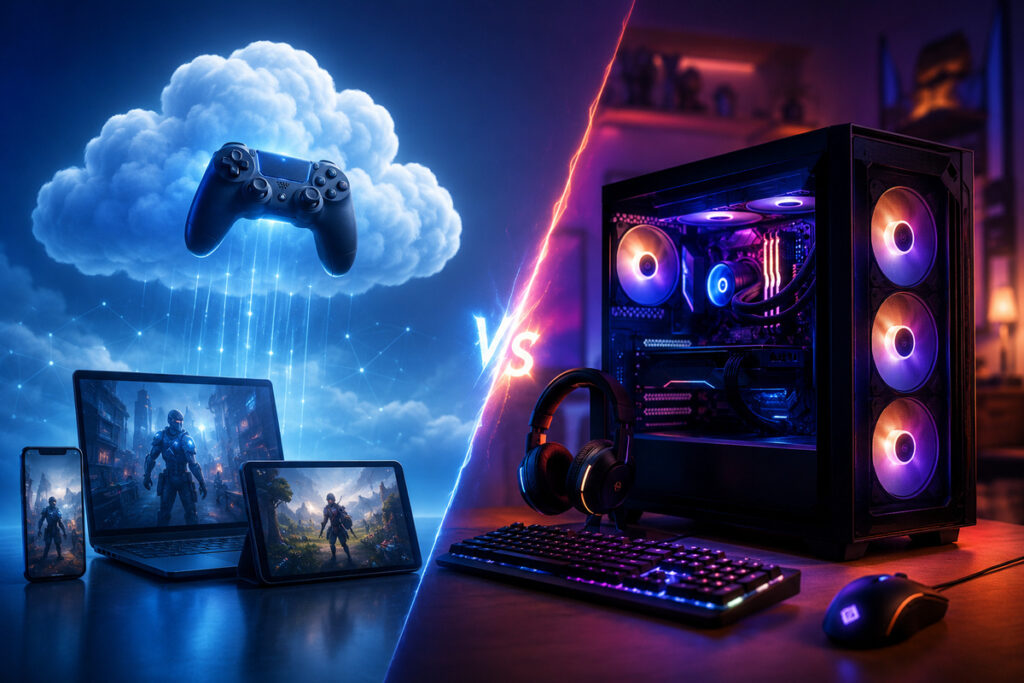
The fundamental difference lies in where the game is processed. In traditional PC gaming, your local computer handles all the game's computations and rendering. In cloud gaming, a powerful remote server does all the processing, and your device simply streams the video output and sends your inputs. This means cloud gaming requires minimal local hardware but relies heavily on a fast, stable internet connection, whereas traditional PC gaming demands significant local hardware investment.
Can I use my existing gaming peripherals with cloud gaming?
Yes, for the most part. Cloud gaming services are designed to be compatible with a wide range of standard gaming peripherals. This typically includes most USB or Bluetooth gamepads (like Xbox or PlayStation controllers), and many services also support mouse and keyboard input for PC-style games. As long as your device recognizes your peripheral, it will usually work seamlessly with the cloud gaming client, sending your inputs to the remote server.
Hey fellow gamers! Ever felt that familiar pang of frustration when a new blockbuster drops, and your trusty rig just barely scrapes by the minimum specs, or worse, doesn't even make the cut? You're not alone. In 2026, with 87% of US gamers regularly diving into virtual worlds, many averaging over 10 hours a week, and mobile gaming continuing its dominance, the desire for flexible, high-performance gaming without the constant hardware upgrade cycle is stronger than ever. We're busy adults balancing jobs, families, and life, and while we love the escape, the skill-building, and the social connections gaming offers, the hassle of setup issues, performance bottlenecks, and costly upgrades can really put a damper on our precious playtime.
Imagine a world where you don't need a top-tier PC or the latest console to play the newest titles in stunning fidelity. A world where your favorite games are ready to go, instantly, on almost any screen you own. That's the promise of cloud gaming, and it's no longer just a futuristic pipe dream. But how does this magic actually happen? How is cloud gaming built to deliver such a seamless experience? In this comprehensive guide, we're going to pull back the curtain, explore the intricate architecture, and arm you with the knowledge to not just understand, but truly optimize your cloud gaming journey. Get ready to game smarter, not harder.
What Exactly Is Cloud Gaming And How Does It Work
Cloud gaming, often called game streaming, is essentially gaming on demand, but with a twist. Instead of your console or PC doing all the heavy lifting – processing graphics, calculating physics, rendering frames – a powerful remote server in a data center handles all of that. When you play a game via a cloud service, your device acts more like a smart display. You send your input (controller presses, mouse clicks) over the internet to the server, the server plays the game, renders the video in real-time, and then streams that video back to your device. It's like watching a super interactive movie where your actions dictate the plot. The entire process of how is cloud gaming built hinges on this remote processing and high-speed streaming.
Where Are My Games Actually Running Data Centers Explained
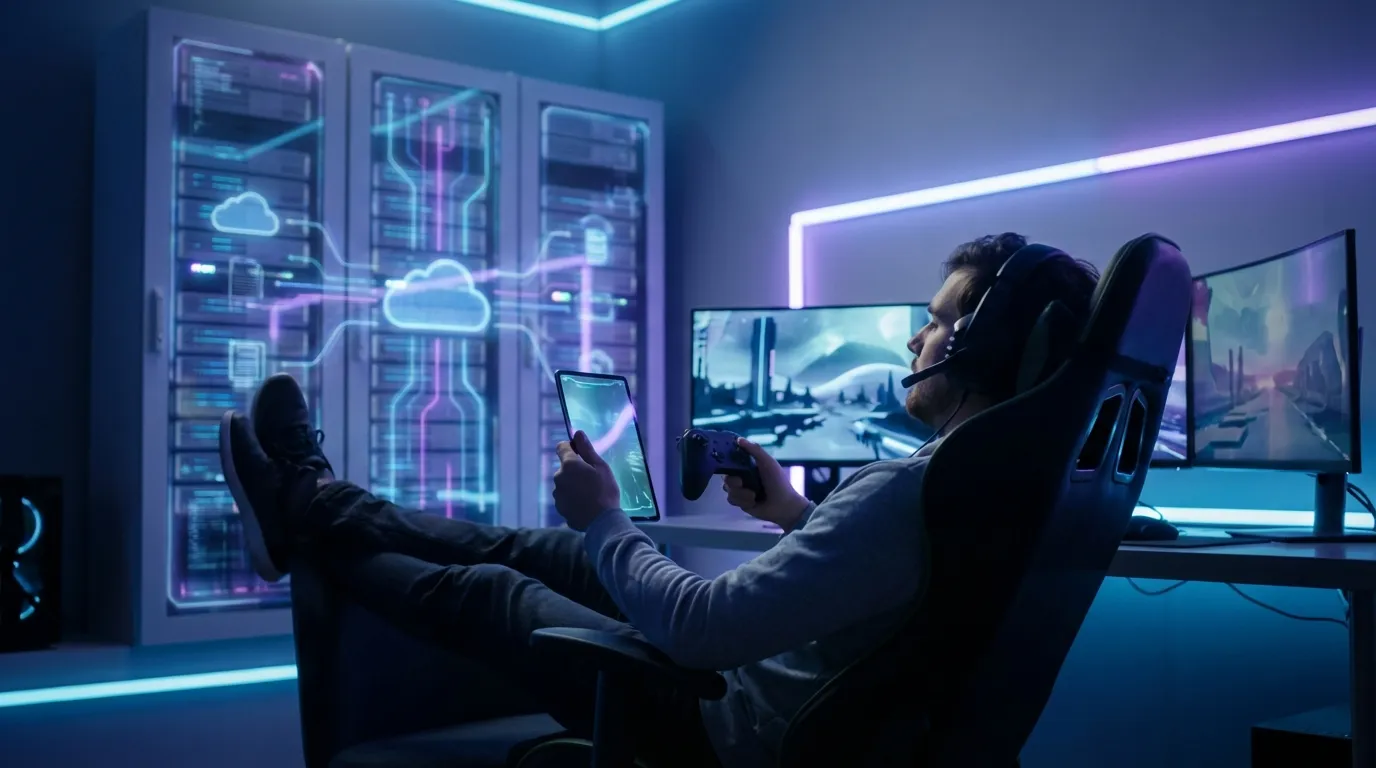
The heart of how is cloud gaming built lies in massive, specialized data centers. These aren't just any server farms; they're packed with high-end gaming hardware specifically designed for performance. Think racks upon racks of powerful CPUs, state-of-the-art GPUs (often multiple per server, virtualized for individual users), and lightning-fast storage. When you start a game, a virtual machine is typically spun up for you on one of these servers, loaded with the game you want to play. These data centers are strategically located around the world to minimize the physical distance between you and the server, a crucial factor in reducing latency. Each data center is a fortress of processing power, constantly updated and maintained by the cloud gaming provider.
How Do Cloud Gaming Services Deliver Such Low Latency
Latency, the delay between your input and the game's response, is the Achilles' heel of cloud gaming. Overcoming it is central to how is cloud gaming built effectively. Cloud providers employ several strategies:
- Proximity: Placing data centers geographically close to players significantly cuts down the time data travels.
- Optimized Network Infrastructure: Utilizing dedicated high-speed fiber optic networks and direct peering agreements with internet service providers ensures data takes the most efficient route.
- Advanced Encoding/Decoding: Video and audio streams are compressed and decompressed in real-time with highly efficient algorithms (like H.264, H.265, AV1) to send as much visual information as possible with minimal delay.
- Input Prediction: Some services use sophisticated algorithms to predict your next input, sending a speculative command to the server slightly before you even press a button.
- Frame Buffering & Adaptive Bitrate: Intelligent systems adjust the video quality on the fly to maintain a smooth stream, prioritizing low latency over absolute visual fidelity during network spikes.
These combined efforts ensure that when you press 'jump,' your character jumps almost instantly, making the experience feel local.
What Hardware Do I Need To Enjoy Cloud Gaming
This is one of cloud gaming's biggest draws for budget-conscious gamers! Unlike traditional gaming, you don't need expensive, high-spec hardware. The minimal requirements are key to how is cloud gaming built for accessibility:
- A compatible device: This could be almost anything – a basic laptop (even a Chromebook!), a smartphone, a tablet, a smart TV, or a dedicated streaming box.
- A reliable internet connection: This is non-negotiable. We'll dive deeper into this, but generally, 20-30 Mbps for 1080p and 50+ Mbps for 4K are recommended, preferably wired (Ethernet) for stability.
- A compatible controller: Most services support standard USB or Bluetooth gamepads (Xbox, PlayStation, third-party), and some even support mouse and keyboard for PC-centric games.
The beauty is, your existing hardware, likely even your phone, is probably ready for a AAA gaming experience thanks to how cloud gaming is built.
Why Is My Internet Speed So Crucial For A Smooth Experience
Think of cloud gaming as streaming a very high-quality, ultra-interactive video. Just like streaming a 4K movie needs good bandwidth, playing a game requires even more because it's two-way communication and real-time. Your internet connection is transmitting your inputs to the server AND receiving the video/audio stream back. A slow or inconsistent connection means:
- Input Lag: Delays between your actions and the game's response.
- Visual Artifacts: Pixelation, blurring, or a drop in graphical quality as the system tries to compensate for insufficient bandwidth.
- Disconnections: If your connection can't keep up, the stream might simply cut out.
For the best experience, a stable, low-ping connection is more important than raw download speed. Many US households now have access to gigabit internet, making cloud gaming incredibly viable for a large segment of the population.
How Do Cloud Platforms Handle Game Updates And Libraries
One less headache for you! Cloud gaming services manage all game updates directly on their servers. When a new patch drops, the provider updates the game on their end, and it's instantly available to you. No more waiting for massive downloads before you can play. This efficiency is a core part of how is cloud gaming built to simplify the gamer's life. Game libraries vary by service. Some offer a Netflix-style subscription with a rotating catalog, while others let you play games you already own on platforms like Steam or Epic Games Store, essentially providing you with a high-powered virtual PC. This flexibility caters to different gamer preferences and budgets.
What Are The Pros And Cons For A Busy Gamer Like Me
For gamers balancing work, family, and play, cloud gaming offers compelling advantages:
Pros:
- No Hardware Hassle: Forget expensive upgrades, installation, and storage management.
- Play Anywhere, Anytime: Game on your lunch break from your phone, on your tablet in bed, or on your old laptop. With 87% of US gamers seeking flexibility, this is huge.
- Instant Access: Jump into games immediately; no downloads or patches.
- Cost-Effective: Save hundreds, even thousands, on hardware. Subscription fees can be cheaper than buying a new console every few years.
- Try Before You Buy: Experience AAA titles without a full purchase if they're part of a subscription library.
- Social Gaming: Connect with friends regardless of their hardware, as long as they have a compatible device and connection. Many social and cozy games thrive on cloud platforms.
Cons:
- Internet Dependent: A poor connection severely impacts quality.
- Ownership vs. Access: You're often renting access, not owning the games themselves (though some services let you play your own library).
- Input Lag: Though minimal with good connections, it can still be noticeable for competitive esports players.
- Limited Game Libraries: Not every game is available on every service.
- Power Consumption: While your device uses less power, the data centers use a significant amount, though often offset by efficiency gains.
How Can Cloud Gaming Save Me Money On Hardware
This is where cloud gaming truly shines for the budget-conscious gamer. The average cost of a high-end gaming PC can easily hit 1500-2500, with new GPUs costing hundreds every few years. Consoles, while more affordable, still represent a significant investment every generation. With cloud gaming, the majority of that cost is absorbed by the service provider. Your investment shifts from hardware to a stable internet connection and a monthly subscription. Over three to five years, this can mean savings of hundreds or even thousands of dollars. It democratizes access to premium gaming experiences, aligning perfectly with the gamer who values smart spending and avoids hype-driven upgrades.
Is Cloud Gaming Truly The Future Of Gaming
While traditional local gaming isn't going anywhere, cloud gaming is undoubtedly a major part of gaming's future, especially for casual and mainstream players. Its accessibility aligns perfectly with modern trends: mobile dominance, cross-play convenience, and the subscription economy. For the 60% of US gamers who balance their hobby with life's demands, the 'play anywhere' convenience is a game-changer. It lowers the barrier to entry for high-fidelity gaming, allowing more people to join the fun. As internet infrastructure improves globally and streaming technology becomes even more refined, cloud gaming will continue to grow, offering an increasingly seamless and compelling alternative to traditional hardware-based gaming.
How Do I Pick The Best Cloud Gaming Service For My Needs
Choosing the right service depends on your gaming habits and priorities. Here's what to consider, central to understanding how is cloud gaming built to cater to you:
- Game Library: Do you want access to a wide range of games via subscription (e.g., Xbox Game Pass Ultimate with Cloud Gaming, PlayStation Plus Premium) or the ability to play games you already own (e.g., GeForce NOW, Shadow)?
- Performance Tiers: Some services offer different subscription tiers with varying resolutions (1080p, 4K), frame rates (60fps, 120fps), and session lengths.
- Device Compatibility: Ensure the service supports your preferred devices (PC, Mac, Android, iOS, Smart TV).
- Data Center Locations: Check if the service has servers geographically close to you for optimal latency.
- Cost: Compare monthly subscription fees and any additional game purchase requirements.
- Exclusive Features: Some services offer unique perks like Xbox Cloud Gaming's integration with Game Pass.
Take advantage of free trials where available to test performance on your specific setup and see which service feels right for you.
Conclusion
Understanding how is cloud gaming built reveals a fascinating blend of powerful remote hardware, optimized network infrastructure, and clever software. It's designed to liberate you from hardware limitations and constant upgrade cycles, offering unparalleled flexibility for the modern gamer. Whether you're sneaking in a quick session on your phone or enjoying a AAA title on your old laptop, cloud gaming makes it possible. It addresses common pain points like expensive upgrades, setup woes, and limited playtime, allowing you to focus on what truly matters: the fun, the challenge, and the social connections. The future of gaming is diverse, and cloud gaming is a vibrant, accessible, and increasingly sophisticated part of it. What's your biggest gaming challenge that cloud gaming could solve? Comment below!
FAQ Section
Is cloud gaming secure for my personal data?
Yes, reputable cloud gaming services employ robust security measures, similar to other cloud services, protecting your personal information and game progress with encryption and secure server environments.
Can I play my existing PC or console games on cloud gaming platforms?
It depends on the service. Some platforms, like GeForce NOW, allow you to stream games you already own on PC storefronts (Steam, Epic Games). Others, like Xbox Cloud Gaming, provide a dedicated library as part of their subscription.
What's the typical input lag I can expect with cloud gaming?
With a stable, high-speed internet connection (wired preferred) and a server close to you, input lag is often imperceptible for most gamers, typically ranging from 20-60 milliseconds. Competitive esports players might notice it, but for casual and single-player games, it's usually not an issue.
Do I need a special controller for cloud gaming?
Most cloud gaming services support standard USB or Bluetooth controllers, such as Xbox and PlayStation gamepads. Some even allow mouse and keyboard input. You likely already own a compatible controller.
Are all games available on cloud gaming services?
No, the game library varies significantly by service due to licensing agreements. Some services offer a curated catalog, while others act as a remote PC allowing you to access a broader range of titles you own.
What's the best internet speed for 4K cloud gaming?
For a smooth 4K cloud gaming experience, a minimum sustained download speed of 50-75 Mbps is generally recommended, along with a very stable connection and low latency (ping) to the server.
Can I play multiplayer games with friends on cloud gaming?
Absolutely. Most cloud gaming platforms fully support multiplayer functionality. You can join your friends in online games just as you would on a local PC or console, provided the game itself supports multiplayer and is available on the cloud service.
Cloud infrastructure low latency streaming data centers virtualized hardware global network user experience focus scalable servers real time encoding decoding input lag reduction network optimization
35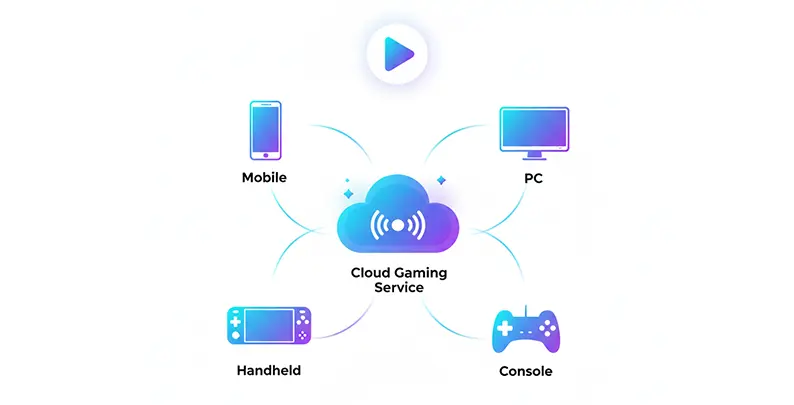


Top Video Game Industry Trends For 2026 Juego Studios 05 Cross Platform And Cloud Gaming. Xbox Cloud Gaming Bald Neue Aufl Sungen Und Bessere Qualit T Xbox Fse.webp. The Future Of Cloud Gaming Technology 2026 And Beyond Future Of Cloud Gaming . How Cloud Gaming Is Shaping The Future Of The Industry SDLC Corp 4 1 1 . Cloud Gaming Latency In 2026 Is It Finally Good Cloud Gaming Latency In 2026 .webp



GeForce Now In Der Xbox App Mehr Flexibilit T Beim Cloud Gaming Xcg S1.webp. How Cloud Gaming Is Changing The Future Of Console Games SDLC Corp How Cloud Gaming Is Changing The Future Of Console Games . Cloud Gaming In 2026 What Gamers Need To Know Cloud Gaming In 2026 What Gamers Need To Know 650434.webp. Cloud Gaming Is The FUTURE GeForce NOW Xcloud Launch In India 2026 . Aphelion 2026 Game Sci Fi Survival Paling Dinanti Vortixel Bermain GeForce Now 2026 Masa Depan Cloud Gaming



New 2026 Wi Fi Xbox Controller Leak Hints At Microsoft S Next Big Cloud 7d286264 2f15 431a A321 . Microsoft Vs Nintendo Vs Sony Seite 11615 Consolewars Foren Xcloud 50 Million Cloud Gaming Revenue Cma Report . Best Cloud Games To Play On Xbox In May 2026. Guida Ai Migliori Servizi Di Cloud Gaming Edizione 2026 Iconiks Cloud Gaming Scaled 1. Vers O Gr Tis Do Xbox Cloud Gaming Com An Ncios Chega Em 2026 Segundo XBOX CLOUD GAMING C03f1aab4b


Epic Games Store Free Games July 9 July 16 2026 And Where To Play Epic Games Store Free Games Nova Lands Tattoo Tycoon 768x432 . CoreWeave S 30B Capex Gamble AI Cloud Debt Crisis 2026 Coreweave 30 Billion Capex Ai Cloud 2026 1536x1022 . The Rise Of Cloud Gaming A Overview Cloud Gaming . Best Cloud Gaming Platforms In 2025 Ultimate Guide Best Cloud Gaming Platforms In 2025 Ultimate Guide.webp. Cloud Gaming Evolution Impact The Role Of Cloud Gaming In The Future 1200px V1.webp

Top 3 Best Cloud Gaming Apps In India 2026 Image. GPU As A Service In 2026 Benefits Pricing Use Cases Cloud GPU Guide Untitled Design 2026 02 1 . Xbox Cloud Gaming Is It Changing How We Play Forever Xcg.webp. Cloud Gaming 2026 Future Of Gaming Lag Free Play Cloud Gaming 2026 . Cloud Gaming Forecasted To Reach 13 6 Billion By 2026 DFC
How Much Data Does Cloud Gaming Use Per Hour 2026 Best Cloud Gaming Handheld . 5 Best Cloud Gaming Services 2026 Xbox GeForce Now How Does Cloud Gaming Work 2 . Maximum Settings Archives Cloud Dosage . Cloud Computing Trends 2026 What S Shaping The Future Of The Cloud Cloud Computing . Sony Reveals AI Based Streaming Tech Built For Cloud Gaming Cloud Dosage Sony Reveals AI Based Streaming Tech Built For Cloud Gaming Feature 1024x576


AWS Builder Center Imag.webp. Cloud Gaming Vs Gaming PC Complete Cost Breakdown Cloud Loadout Cloud Gaming Vs Buying A Gaming PC CostWhich Is Cheaper 1024x683 . How Cloud Gaming Is Changing The Game For Gamers Amkette An Of A Cloud With Gaming Controllers . 50 Best Free Cloud Resources For Developers 2026 Directory 50 Plus Free Cloud Resources Developers 2026.webp. Google Cloud Next 2026 Highlights AI And Enterprise Google Cloud Next 2026 Event