Ever wondered if a RAM upgrade will improve gaming performance for your favorite titles? This comprehensive guide dives deep into how Random Access Memory impacts your gaming experience, helping you decide if an upgrade is truly worth it for your setup. We'll explore everything from frame rates and loading times to multitasking capabilities, addressing common gamer pain points like budget constraints, balancing life with gaming, and getting the most value for your money. Whether you're a casual player enjoying social games or a competitive esports enthusiast, understanding RAM's role is crucial. Discover the sweet spots for capacity and speed, avoid common pitfalls, and learn how to optimize your system for smoother gameplay and quicker responsiveness. We'll provide practical, actionable advice, drawing on the latest 2026 gaming trends and hardware insights, ensuring you can make an informed decision that elevates your gaming without unnecessary expense or complicated setups. Get ready to game smarter, not just harder.
Related games- Uncovering Roblox's Original Name: DynaBlocks Revealed
- Guide to matt13645 Roblox Everything You Need
- Guide to Coquette D5 GTA: Dominate Los Santos!
Will a RAM Upgrade Improve Gaming Performance?
A RAM upgrade can significantly improve gaming performance if your current system is bottlenecked by insufficient memory or slow RAM speeds. Key areas of improvement include reduced stuttering, faster loading times, and smoother multitasking. However, if your CPU or GPU are already the main bottlenecks, a RAM upgrade may offer only minimal gains.
When is a RAM Upgrade Most Beneficial for Gamers?
A RAM upgrade is most beneficial if you have 8GB or less RAM, frequently experience high RAM usage (over 90%), notice constant stuttering or long loading screens, or if you actively multitask while gaming (e.g., streaming, browsing, Discord). Modern AAA games, especially open-world titles, benefit greatly from 16GB or 32GB of fast RAM.
How Do I Choose the Right RAM for a Gaming Upgrade?
When choosing RAM for a gaming upgrade, first check your motherboard's compatibility for DDR4 or DDR5, maximum supported capacity, and speed (MHz). Aim for 16GB or 32GB (2x8GB or 2x16GB for dual-channel) with speeds of 3200MHz-3600MHz (DDR4) or 5600MHz-6400MHz (DDR5) and lower CAS Latency (CL). Matching existing sticks is crucial if not replacing all of them.
What's the Difference Between RAM Capacity and RAM Speed for Gaming?
RAM capacity (e.g., 8GB, 16GB, 32GB) determines how many game assets and background applications your system can hold in quick-access memory. RAM speed (MHz) and latency (CL) dictate how quickly your CPU can access that data. Both are important; sufficient capacity prevents stuttering from memory exhaustion, while faster speeds reduce processing delays, especially for Ryzen CPUs and minimum frame rates.
Can RAM Influence My Minimum FPS in Games?
Yes, RAM can significantly influence your minimum FPS, which is often more critical for a smooth gaming experience than average FPS. Insufficient RAM can cause constant data swapping to your storage, leading to sharp dips in frame rates (stuttering). Faster RAM with lower latency can also improve minimum frame rates by reducing CPU bottlenecks and ensuring data is delivered quickly, preventing momentary slowdowns.
Is Upgrading RAM a Difficult Process for Average Gamers?
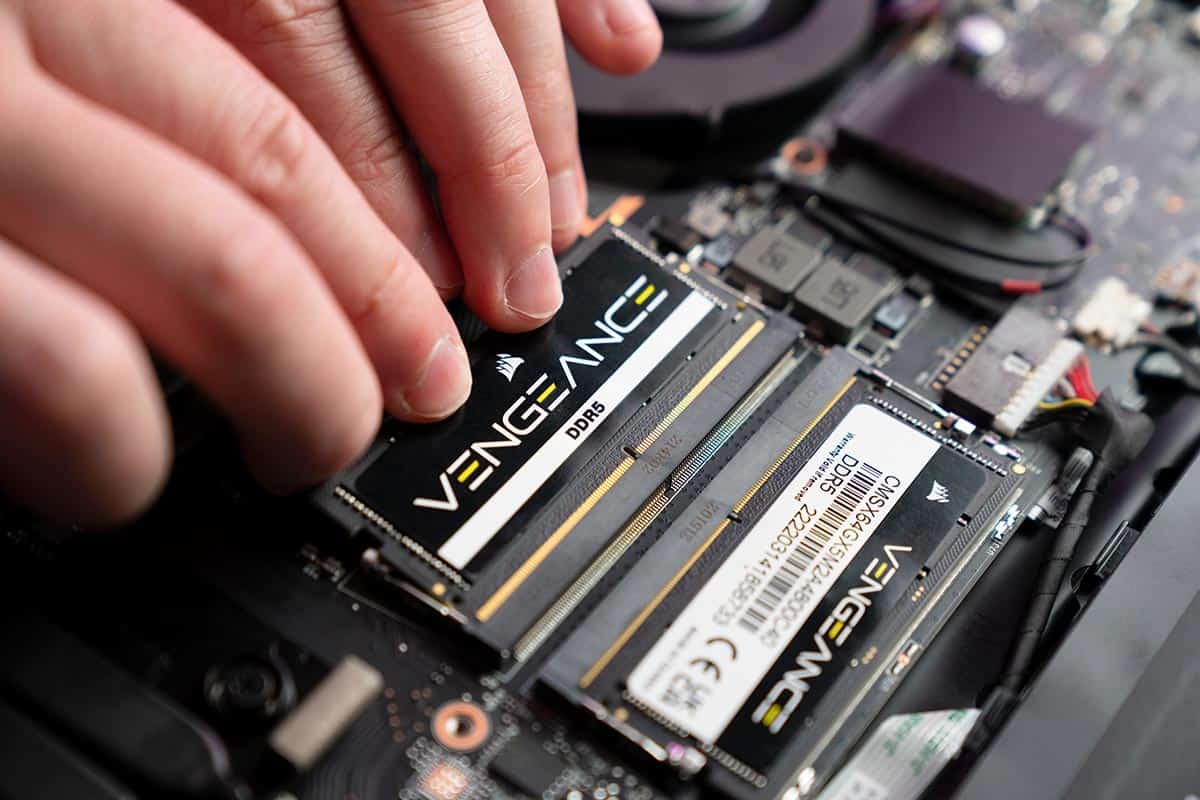
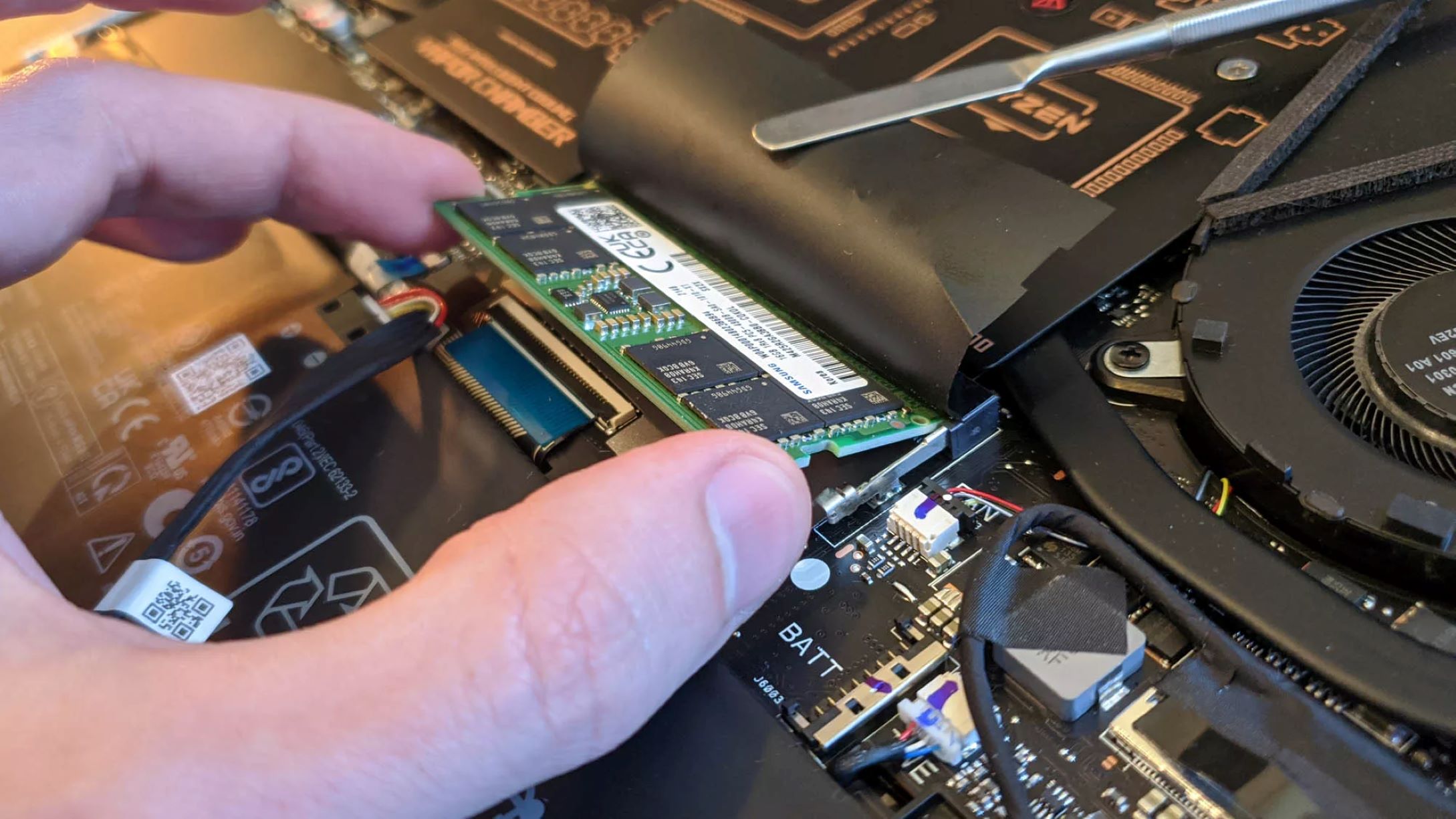
No, upgrading RAM is generally one of the easiest PC hardware upgrades. It usually involves opening your PC case, unlatching retention clips on your motherboard's RAM slots, removing old modules (if any), and pressing new modules firmly into place until the clips engage. No special tools are typically required, and many online guides and videos can walk you through the process step-by-step.
Will a RAM Upgrade Improve Gaming for Integrated Graphics?
Yes, a RAM upgrade, particularly increasing capacity and speed, can significantly improve gaming performance for systems using integrated graphics (iGPUs). iGPUs utilize a portion of your system's main RAM as their video memory. Therefore, more and faster RAM directly translates to more available video memory and higher bandwidth for the iGPU, leading to better frame rates and smoother gameplay compared to systems with less or slower RAM.
Are you a dedicated gamer, perhaps balancing a career and family, who cherishes those precious hours spent in virtual worlds? You're not alone. Many of us, part of the 87% of US gamers who play regularly, averaging over 10 hours a week, often find ourselves looking for ways to squeeze more performance out of our gaming rigs without breaking the bank or dedicating countless hours to research. We crave that smooth, immersive experience, where every frame counts and loading screens don't steal valuable playtime. We value performance optimization, yes, but also value for money, and staying current with trends without falling for every marketing hype.
One question that frequently pops up in gaming forums and late-night Discord chats is: "Will a RAM upgrade improve gaming performance?" It's a valid query, especially when you're noticing stutters in your favorite open-world adventure or struggling to keep Discord, a browser, and your game running simultaneously. The answer, like many things in PC gaming, isn't a simple yes or no. It depends. But don't worry, friend. This comprehensive guide is here to cut through the noise, offering practical, actionable insights rooted in 2026's gaming landscape, so you can make an informed decision that genuinely improves your gaming life, not just your PC specs on paper. Let's dive into whether a RAM upgrade is the missing piece in your gaming puzzle.
What Role Does RAM Play in Gaming Performance?
RAM, or Random Access Memory, acts as your computer's short-term memory. When you launch a game, its assets – textures, models, sound files, and more – are loaded into RAM for quick access by your CPU and GPU. Unlike your hard drive (SSD or HDD), which stores data long-term, RAM provides incredibly fast retrieval, essential for keeping your game running smoothly. If your RAM is insufficient, your system has to constantly swap data between the much slower storage drive and RAM, leading to noticeable stutters, frame rate drops, and longer loading times. Think of it as a workbench: the more space you have (RAM capacity), the more tools and materials you can keep at hand (game assets), reducing trips to the storage closet (your SSD/HDD).
Will a RAM Upgrade Always Improve My Gaming Experience?
No, a RAM upgrade will not always improve your gaming experience. The impact is highly dependent on your current system's specifications and the games you play. If you already have enough RAM (typically 16GB for most modern games) and decent speeds, additional RAM or faster RAM might offer only marginal gains, if any. Often, other components like your Graphics Processing Unit (GPU) or Central Processing Unit (CPU) are the primary bottlenecks. For instance, an older GPU will struggle to render demanding games regardless of how much RAM you have. However, if you're frequently hitting 100% RAM usage, experiencing consistent stuttering, or have an older system with 8GB or less, a RAM upgrade can lead to a significant, noticeable improvement in smoothness and responsiveness. It's about addressing the actual bottleneck in your system, which for some gamers, especially those multitasking heavily or playing RAM-intensive titles, is indeed memory.
How Much RAM is Enough for Modern Gaming in 2026?
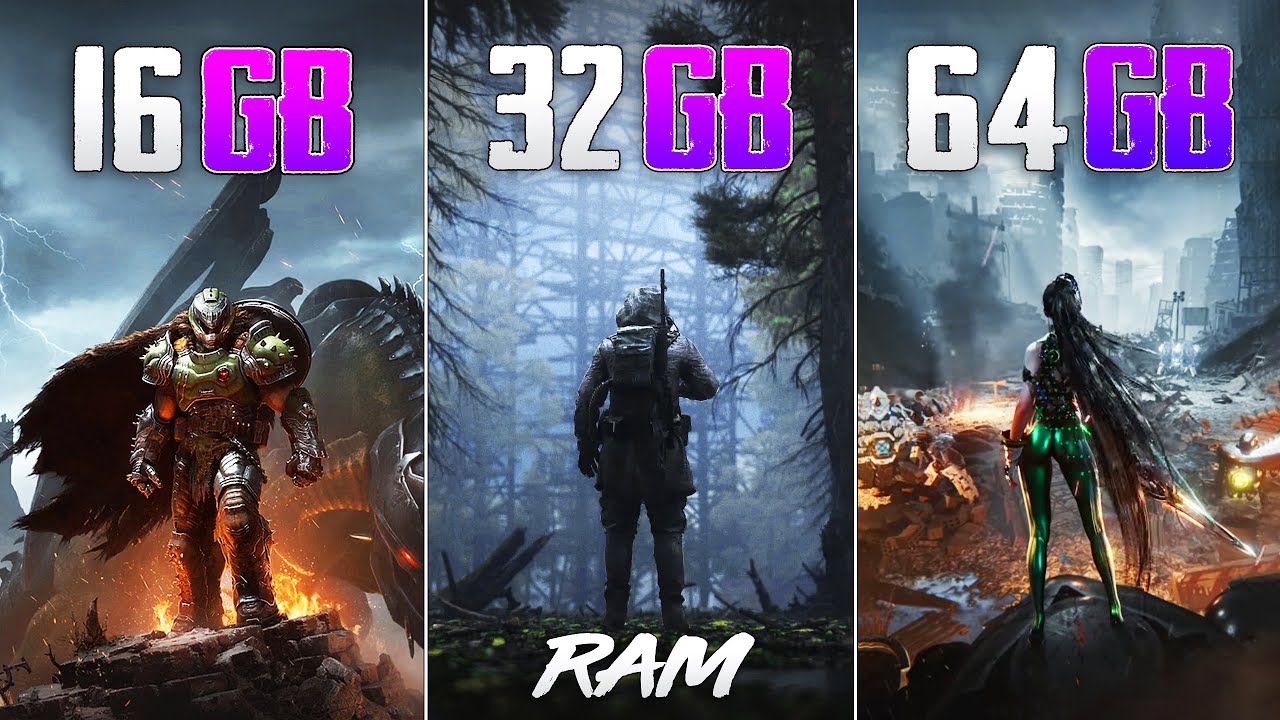
For most gamers in 2026, **16GB of RAM** is considered the comfortable sweet spot for a smooth gaming experience. This capacity handles the vast majority of current AAA titles, allows for background applications like Discord, web browsers, and streaming software, and keeps things running without constant paging to your storage drive. However, for enthusiasts, content creators who also game, or those playing particularly demanding simulation or open-world games with heavy mods, **32GB of RAM** is becoming increasingly beneficial. This ensures future-proofing and provides ample headroom for multitasking, streaming, or running virtual machines alongside your games. Less than 16GB, especially 8GB, is generally insufficient for a seamless modern gaming experience and will likely be a bottleneck.
Does RAM Speed (MHz) and Latency (CL) Matter for Gaming?
Absolutely, RAM speed and latency can make a noticeable difference, though the extent varies by CPU architecture. **RAM speed (measured in MHz)** dictates how many cycles per second the memory can perform, while **latency (CAS Latency or CL)** refers to the delay before RAM can respond to a request. Faster RAM (higher MHz) combined with lower latency (lower CL) can significantly boost CPU performance, especially for AMD Ryzen processors, which are particularly sensitive to memory speed due to their Infinity Fabric interconnect. Intel CPUs also benefit, though often to a slightly lesser degree. For example, upgrading from 2400MHz to 3600MHz RAM with decent timings can lead to a measurable increase in minimum frame rates and overall system responsiveness, reducing micro-stutters. It's not just about raw capacity; the speed at which that data can be accessed plays a crucial role in overall system fluidity, impacting everything from game loading to how quickly your system responds to inputs.
What are the Signs That I Need a RAM Upgrade for Gaming?
Identifying the need for a RAM upgrade involves looking for specific symptoms during your gaming sessions. Here are the common indicators:
- Frequent Stuttering and Frame Drops: If your game consistently stutters, especially when loading new areas or during intense action, even if your GPU usage isn't at 99-100%, insufficient RAM could be the culprit.
- Long Loading Screens: Noticeably long loading times between levels, maps, or even just starting a game, can indicate your system is struggling to load assets into fast memory.
- High RAM Usage: Monitor your RAM usage with Task Manager (Windows) or Activity Monitor (macOS). If your system consistently hits 90% or more RAM usage while gaming, especially with other applications closed, an upgrade is warranted.
- Game Crashes: Random game crashes or freezes that aren't explained by other hardware issues can sometimes be linked to memory exhaustion.
- Poor Multitasking Performance: If running Discord, a browser, or streaming software alongside your game significantly degrades performance, you likely need more RAM to handle the load.
These signs point towards RAM being a bottleneck in your system, and addressing it could unlock smoother, more enjoyable gameplay.
How Do I Check My Current RAM Configuration and Usage?
Checking your RAM configuration and usage is straightforward. For Windows users, the easiest way is through Task Manager. Press Ctrl+Shift+Esc to open it, then navigate to the 'Performance' tab and select 'Memory'. Here, you'll see your total RAM capacity, how much is currently in use, the speed (MHz), and how many slots are being used. For a more detailed breakdown, you can use third-party tools like CPU-Z, which provides comprehensive information on each RAM stick installed, including its exact speed, timings, and manufacturer. Understanding your current setup is the first crucial step before considering any upgrade, allowing you to accurately assess your current bottleneck and plan your next steps effectively.
What are the Best Practices for Upgrading RAM for Gaming?
Upgrading RAM can be a simple and effective way to boost performance, but a few best practices ensure a smooth process and optimal results:
- Check Motherboard Compatibility: Verify what type of RAM (DDR4 or DDR5), max capacity, and supported speeds your motherboard supports. Your motherboard manual or manufacturer's website is your best friend here.
- Match RAM Modules: For optimal performance (especially with dual-channel or quad-channel setups), it's highly recommended to use identical RAM modules in pairs. This means matching capacity, speed (MHz), and ideally, timings (CL). Mixing different sticks can lead to instability or force all modules to run at the lowest common denominator.
- Install in Correct Slots: Refer to your motherboard manual for the correct slots to populate for dual-channel or quad-channel memory. Incorrect installation can result in single-channel mode, significantly reducing performance.
- Consider Dual Channel: Always aim for at least two RAM sticks (e.g., 2x8GB instead of 1x16GB) to enable dual-channel memory, which effectively doubles the memory bandwidth and offers a noticeable performance uplift.
- Enable XMP/DOCP: After installing new RAM, enter your BIOS/UEFI and enable the XMP (Intel) or DOCP (AMD) profile. This will automatically set your RAM to its advertised speed and timings, otherwise, it will run at a slower default speed.
- Buy from Reputable Brands: Stick to trusted brands like Corsair, G.Skill, Crucial, Kingston, and TeamGroup for reliability and performance.
Is DDR5 RAM Worth It for Gaming in 2026?
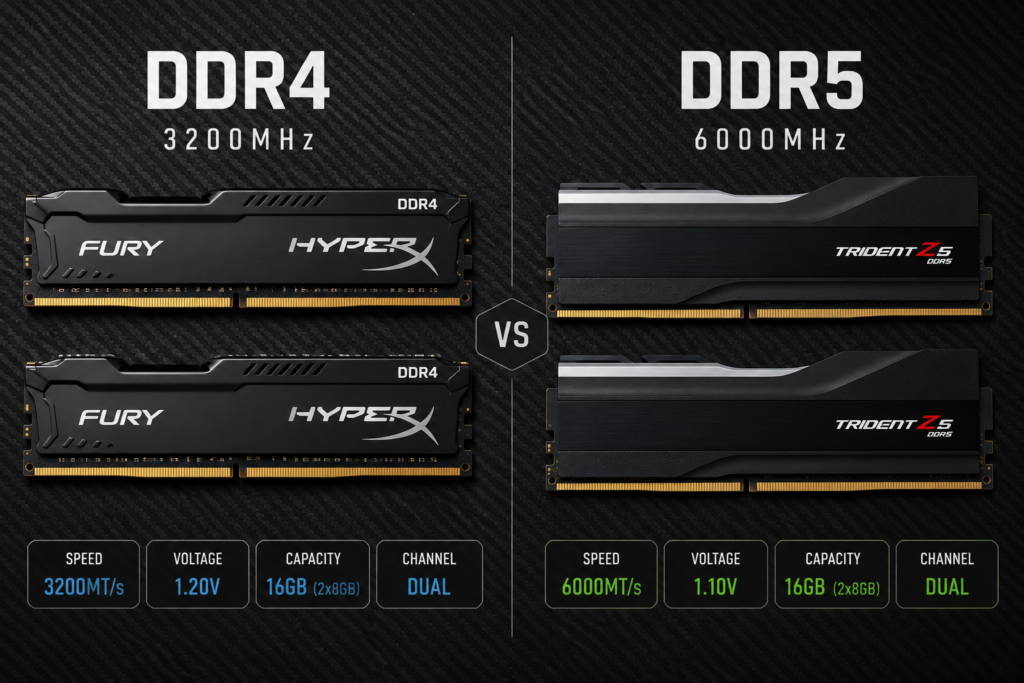
In 2026, DDR5 RAM has matured significantly and is definitely worth considering if you're building a new PC or upgrading a platform that supports it (like Intel's 12th Gen and newer, or AMD's AM5 platform). Early DDR5 modules offered only marginal gains over high-end DDR4, but newer, faster DDR5 kits with tighter timings have shown notable performance improvements, particularly in CPU-intensive games and productivity tasks. The higher bandwidth and improved efficiency of DDR5 mean better future-proofing and smoother performance with upcoming titles that will increasingly leverage its capabilities. While DDR4 can still provide excellent gaming performance, especially on a budget, DDR5 is the direction the industry is heading. If you have the budget and a compatible platform, investing in DDR5 now will put you in a better position for the next several years of gaming innovation, including emerging trends like AI-enhanced gaming and more complex virtual environments.
Can Too Much RAM Cause Problems in Gaming?
While having insufficient RAM is a clear problem, having
RAM upgrades can improve gaming, especially with insufficient memory or slow speeds. Key impacts include smoother multitasking, faster loading, and improved minimum frame rates. Not always a magic bullet; GPU and CPU often have a greater impact. Optimal capacity is typically 16GB or 32GB for modern gaming. Faster RAM (higher MHz, lower CL) can boost performance, particularly with AMD Ryzen CPUs. Check motherboard compatibility and system bottlenecks before upgrading.
35

12 Best RAM For Gaming June 2026 Expert Reviews Comparisons Featured Image 91alw1kl 300x210 . RANAXPLAY RAM Prices 2026 Forecast Why AI Is Increasing Costs The J3AEW6iSHKS S8 =w1200 H630 P K No Nu. Mejor RAM Para Gaming En 2026 Estados Unidos DDR4 Vs DDR5 Mejor Ram Para Gaming 2026 Ddr5 32gb. RAM Prices 2026 Why They Are Rising When To Buy Unnamed 1 . How To Upgrade RAM On Laptop Devices 2026 DDR5 Laptop RAM Upgrade How To Upgrade RAM On Laptop Devices DDR5 Laptop RAM Upgrade

Bester RAM 2026 Die 10 St Rksten Kits F R Gaming Creator Blog Der Beste RAM 2026 . 6 PC Hardware Upgrades That Actually Improve Gaming And In Gaming Pc Setup . Best Windows 11 Settings For Gaming Max FPS 2026 Best RAM For Gaming 1024x683 . Best Computer RAM For Gaming 2026 DDR5 Vs Gaming PC Guru 81eRBZ HwkL. AC SL1500 . 10 Best Budget DDR5 RAM Kits For Gaming May 2026 Top Rated Best Budget DDR5 RAM Kits For Gaming 1024x572



How Rising Memory Prices Are Affecting PC Upgrades In 2026 Ssd 3 . Rising RAM Prices Expected To Increase Technology Costs By 2026 Featured Cover Rising RAM Prices Expected To Increase Technology Costs By 2026 . Best RAM For Gaming Upgrade Your PC And Laptop RAM Lucky Falcon Best 16GB RAM For Gaming . When Will DDR5 Prices Drop 2026 Memory Market Forecast Unibetter Ddr5 Price 2026 . Nvidia Is Reportedly Looking To Cut Gaming GPU Production By Up To 40


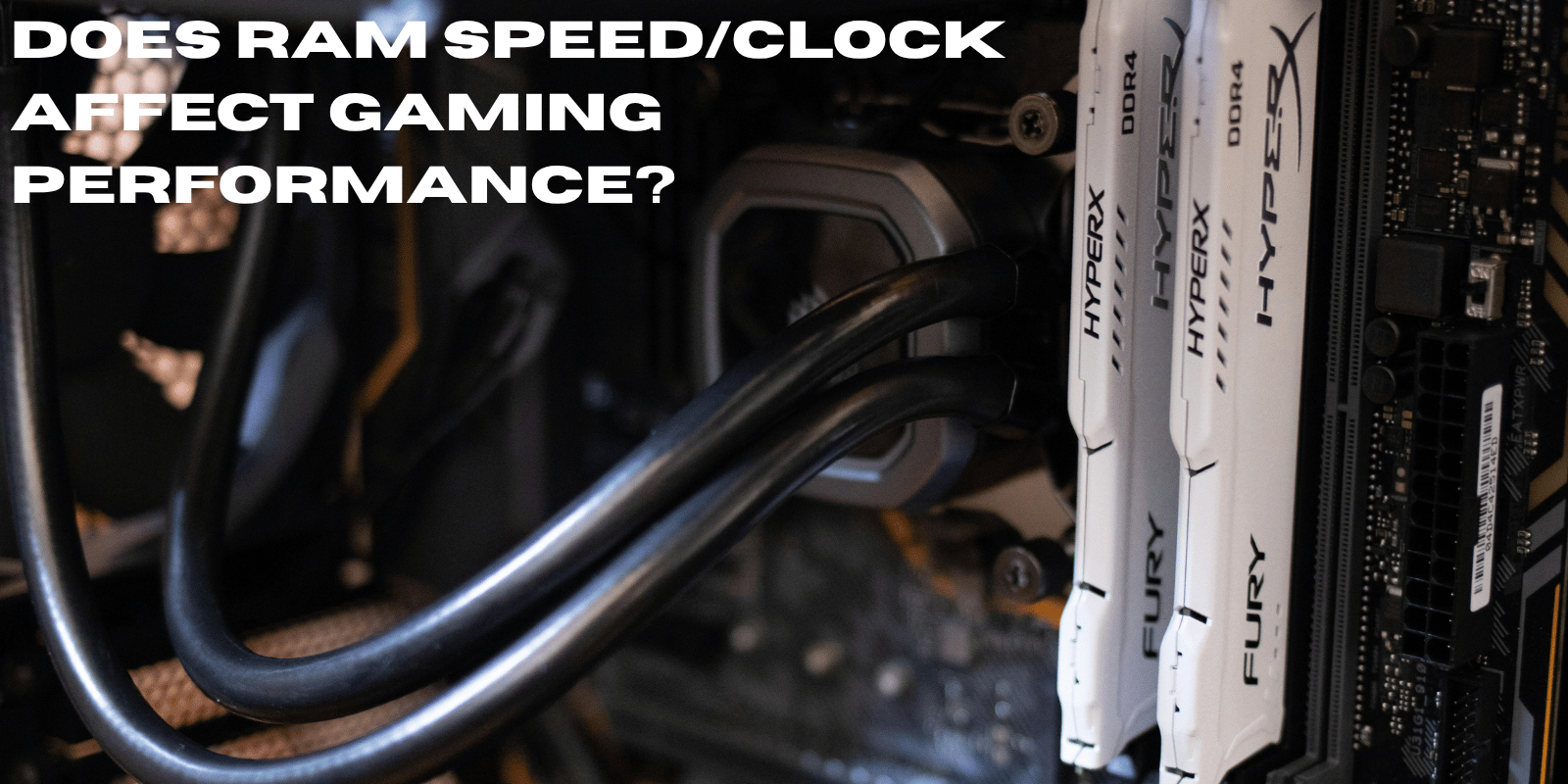
I Ve Been Writing About Games For Years Here Are The Biggest Stories GPU RAM SSD On Table . How Much RAM For Gaming In 2026 8GB Vs 16GB Vs 32GB The Ultimate Guide How Much Ram For Gaming 768x429 . 16GB Vs 32GB Vs 64GB How Much RAM Do You Need For Gaming In 2026 . Best RAM For Gaming In 2026 9meters 1pjstsxr3ks 1536x1152 . Will Upgrading RAM Increase Gaming Performance Does Ram Speedclock Affect Gaming Performance


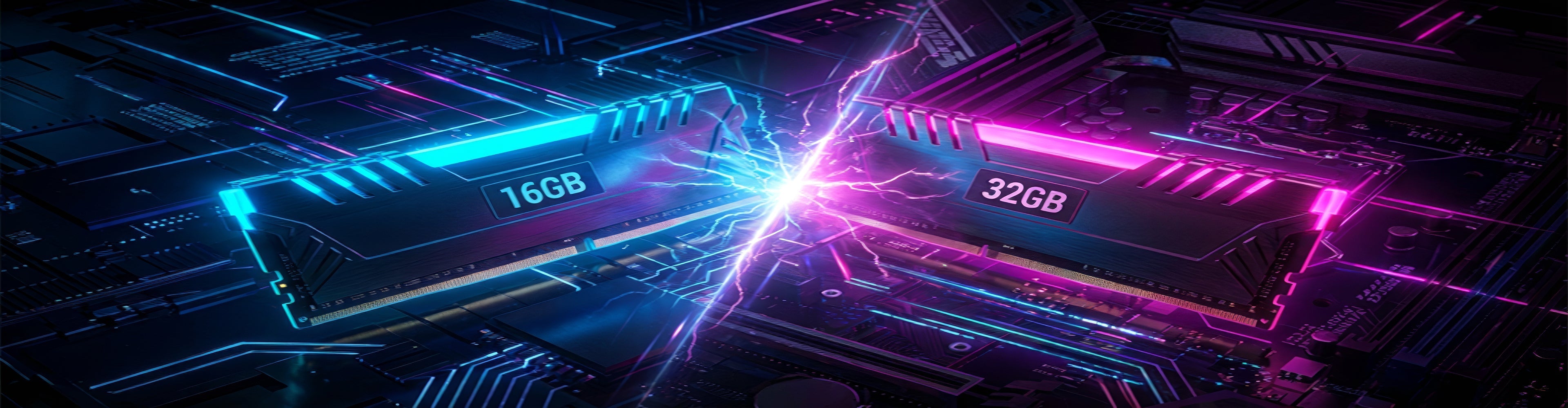

How Much RAM Is Needed For Gaming In 2026 Full Benchmark Analysis Ddr5 Memory Price Increase Pc Demand.webp. Best Gaming Laptops At CES 2026 RTX 5090 Options Dual Screen Picks Lenovo Legion Pro Rollable Concept. New 2026 Ram 1500 Revealed What S Changed Inside Towing Specs Tech New 2026 Ram 1500 Revealed . How Much RAM Do You Actually Need For Gaming In 2026 Reforged Rigs 16GBvs32GB . RAM Price Crisis 2025 2026 Analysis And Forecast RAM Crisis RAMageddon Memory Prices 2025 DDR4 DDR5 Expensive Memory Shortage 2026 Forecast AI And Memory
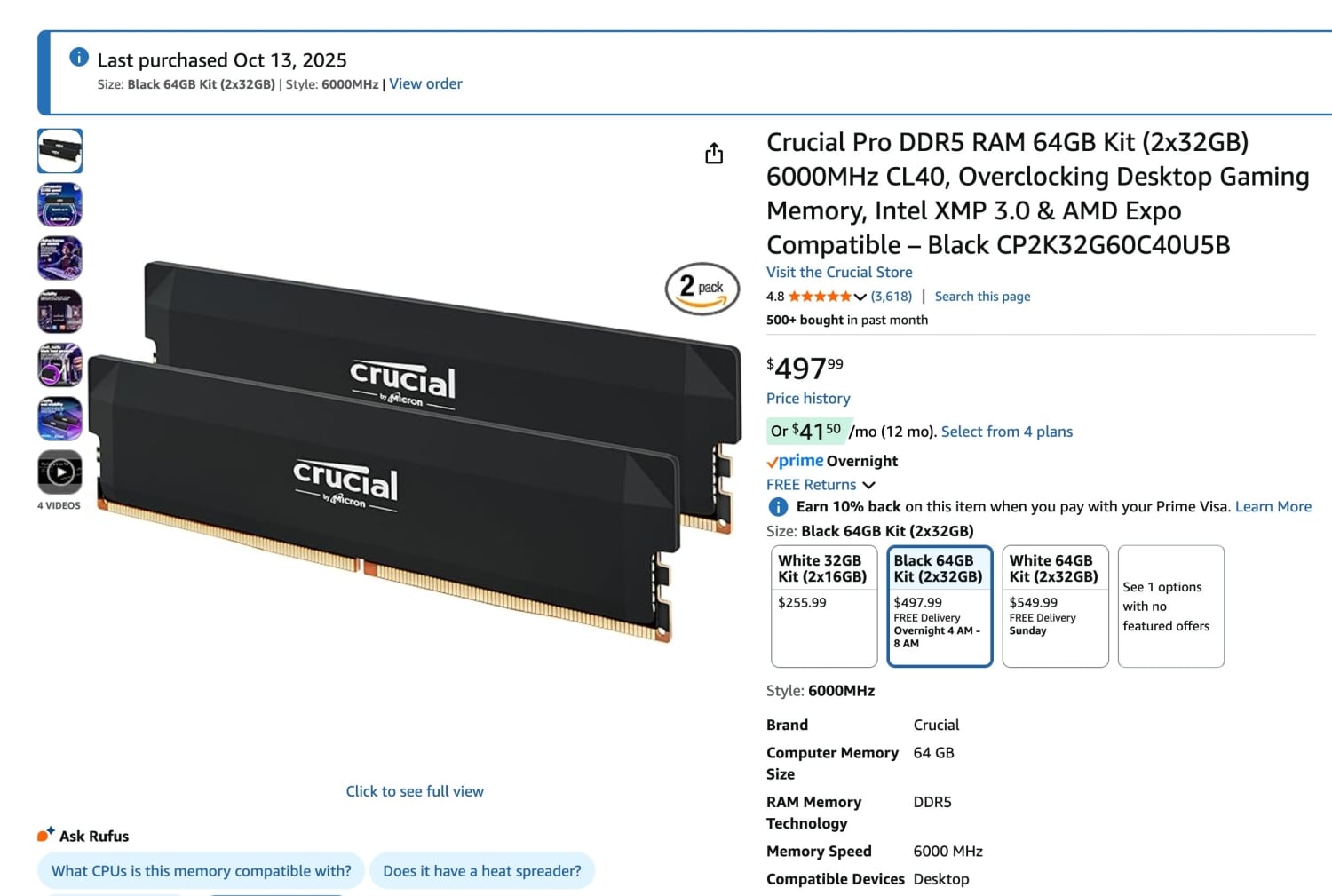
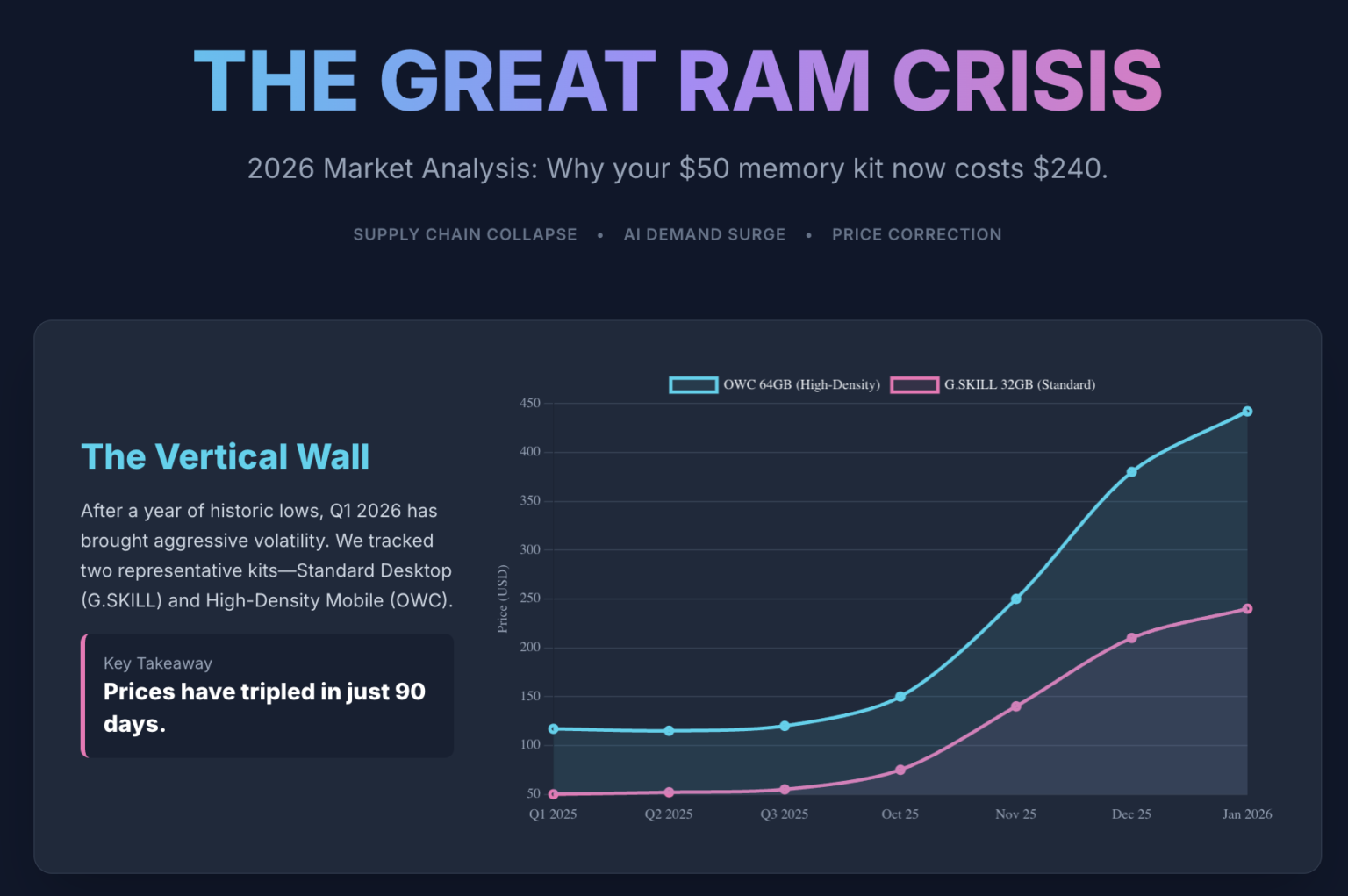
Epic Games CEO RAM Price Increases A Real Problem For High End Gaming 109059 36 Epic Games Ceo Ram Price Increases Real Problem For High End Gaming Several Years Full . We Tracked Ram Prices In 2025 This Is What We Found And What You Screenshot 2026 01 11 At 2.27.30 AM 1536x1021 . How To Upgrade Your RAM On Your Laptop Robots Net 8 Best 16gb Ram For Laptop For 2023 1702146953 . The Best RAM For Gaming 2026 The Best Memory To Buy In This Trying 1200 80 . PC Buyers Warned Of Possible Price Hikes In 2026 As Memory Shortages Loom
Articles By Nick Evanson Hardware Writer PC Gamer 650 80 . RAM Prices 2026 Why Memory Skyrocketed 400 DDR5 DDR4 RAM Prices Exploded 400 In 2026 - AI Boom And Memory Shortage Explained 1 1024x549 . Can A RAM Upgrade REALLY Improve Your Laptop S Speed YouTube . The Best Gaming RAM For Laptops In 2024 Best Ram To Pair With Rtx 4060 Ti Game Rant Thumb . Next Gen Gaming RAM Guide Upgrade To Ddr5 Ram And Boost Your Gaming In Sa.webp